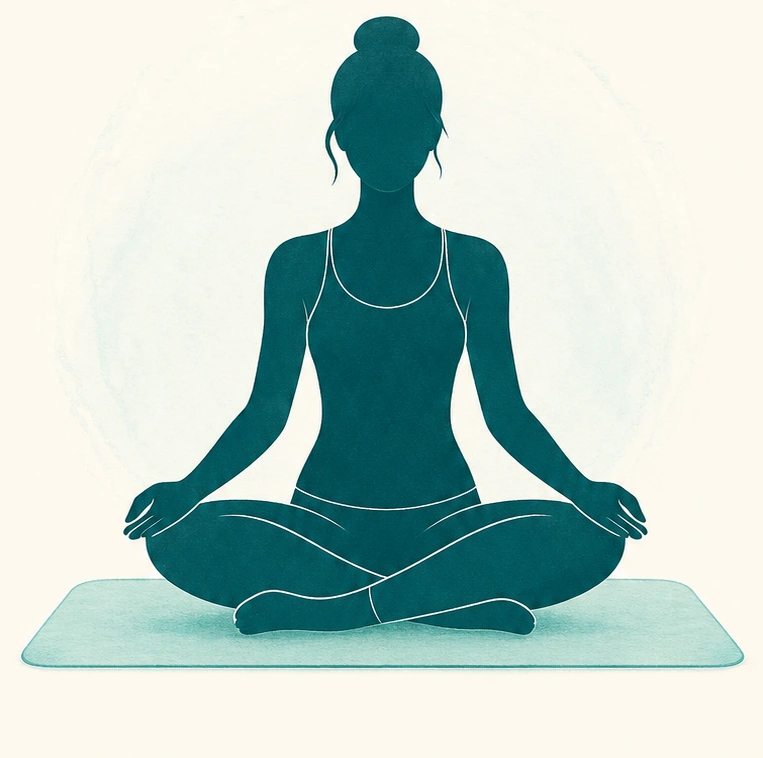
A simple cross-legged seat that supports breath awareness, steady posture, and a calm transition into practice. It is often used at the start or end of a class because it is stable, accessible, and easy to sustain.
Sit on a folded blanket or block to raise the hips above the knees. Move the feet farther forward if the hips are tight. Keep the hands on the thighs instead of reaching for a formal mudra.
Avoid or modify if sitting cross-legged causes knee pain, hip pinching, or numbness in the legs. Use support under the hips if the pelvis tips back or the lower back rounds. Switch to a chair if needed.
Breathe evenly and settle the weight through both sitting bones.
What you should feel
A grounded seat through the hips and sitting bones, a long but relaxed spine, and an even, unforced breath. The pose should feel simple and steady rather than effortful.
Benefits
Supports calm breathing and focused attention. Helps establish a stable seat for meditation or warm-up work. Encourages gentle length in the spine and a relaxed upper body.
Common mistakes
Rounding the lower back instead of lifting through the spine. Forcing the knees down or sitting unevenly on one hip. Holding tension in the shoulders, jaw, or hands.